Why Do Electric Motor Contactors Matter in Industrial Applications?
In industrial applications, the importance of Electric Motor Contactors cannot be overstated. According to a report by the International Electrotechnical Commission, contactors facilitate efficient electrical control, impacting energy consumption and operational safety. These devices allow for the safe switching of electric motors in diverse environments. Properly functioning contactors can lead to reduced energy costs, yet many industries still overlook their significance.
Dr. Emily Cook, an expert in industrial automation, emphasizes, "Electric Motor Contactors are the backbone of mechanical performance." Her insight highlights an often-underappreciated aspect of machinery. Moreover, a recent study found that 30% of motor failures trace back to faulty contactors. This statistic illustrates the need for regular maintenance and the potential risks of neglect.
While advancements in technology enhance efficiency, reliability remains an issue. Industries must reconsider their maintenance schedules. Addressing contactor issues proactively can lead to better performance and safer operations. Ignoring their role could result in costly downtime and safety hazards. In conclusion, the Electric Motor Contactor plays a vital role that deserves more attention in industrial settings.
Understanding Electric Motor Contactors: Definition and Functionality
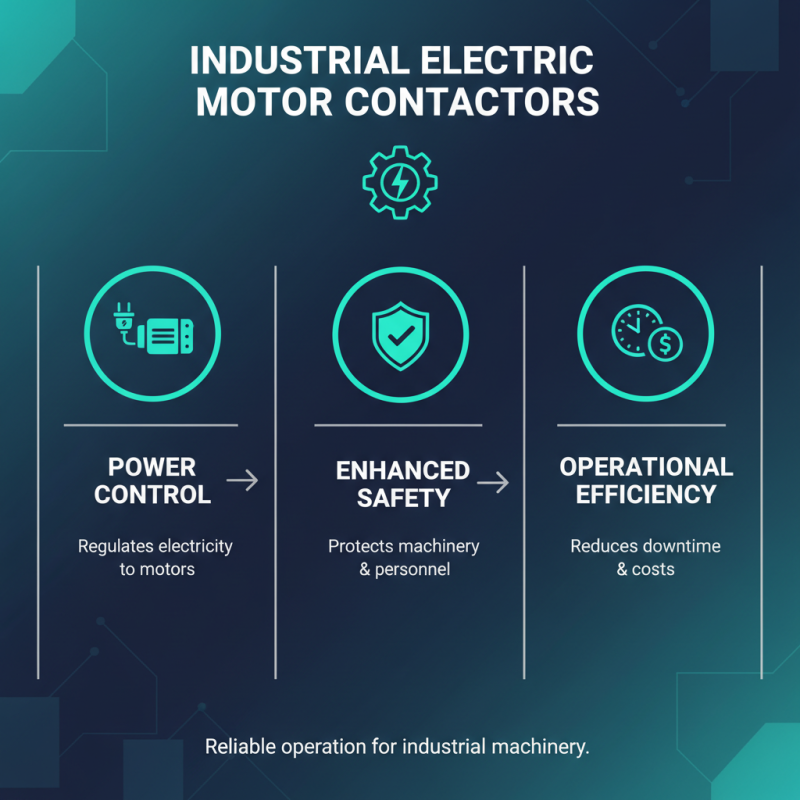
Electric motor contactors play a crucial role in industrial settings. They control the flow of electricity to motors, allowing safe operation. These devices switch motors on and off, which can prevent overheating. According to industry reports, improper control can lead to a 20% decrease in motor life. This shows the importance of choosing the right contactor.
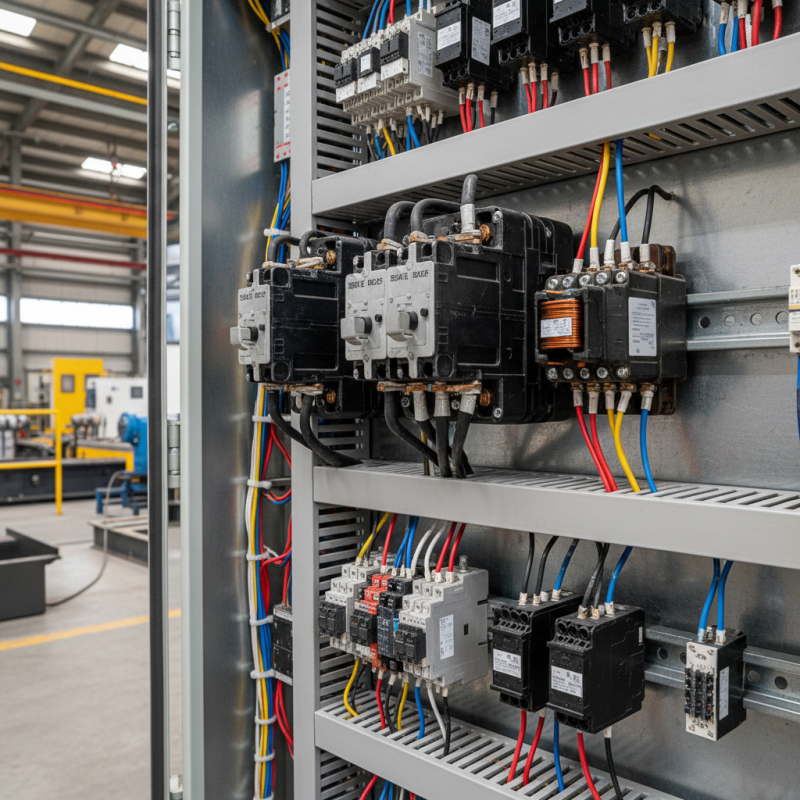
A contactor consists of several components, including the coil, contacts, and arc chamber. The coil activates the contactor, while the contacts complete the circuit. These parts must work flawlessly to ensure motor efficiency. Studies indicate that nearly 30% of motor failures stem from contactor issues. Regular inspections can detect wear and help maintain performance. This reveals a gap between known risks and proactive management.
Understanding the functionality of electric motor contactors is essential. They are not just switches; they safeguard machinery. Over time, wear can affect performance. A small flaw might lead to significant energy loss. Reports suggest that energy inefficiencies can cost up to 10% in operational expenses. This is an area where industries need to improve. Monitoring and replacing contactors in time can save both money and energy.
The Role of Contactors in Industrial Motor Control Systems
Contactors play a critical role in industrial motor control systems. They act as electronic switches, managing the flow of electricity to motors. This function is vital in automating processes. When a motor requires power, a contactor receives a signal and closes the circuit. This allows electricity to flow efficiently, supporting operational needs.
In practice, contactors are essential for safety and reliability. They protect motors from overloads and short circuits. Unfortunately, not all contactors are created equal. Some may fail under high loads, risking equipment damage. Regular maintenance is key. Inspecting contacts can prevent these issues before they escalate. Ensuring that contactors function properly minimizes downtime, enhancing overall productivity.
Connections in electrical control circuits must be clear and secure. Poor wiring can lead to failures and costly repairs. Operators should regularly check these connections. Inadequate attention to detail may result in operational inefficiencies. Evaluating the performance of contactors is crucial. It could lead to long-term improvements in industrial applications. Being proactive in maintenance can save resources and extend the lifespan of equipment.
Why Do Electric Motor Contactors Matter in Industrial Applications? - The Role of Contactors in Industrial Motor Control Systems
| Contactor Type |
Voltage Rating (V) |
Current Rating (A) |
Applications |
Operating Principle |
| Electromechanical Contactor |
24-690 |
9-800 |
Motors, HVAC Systems |
Magnetic coil activation |
| Solid State Contactor |
24-480 |
10-1000 |
Lighting Control, Motors |
Silicon-controlled rectifiers (SCR) |
| Latching Contactor |
24-600 |
10-300 |
Energy-saving circuits, Motors |
Permanent magnet for holding |
| Smart Contactor |
120-480 |
15-600 |
Industrial Automation, Motors |
Integrated sensors for load management |
Key Benefits of Using Electric Motor Contactors in Industry
Electric motor contactors play a vital role in industrial settings. These devices control the power supply to motors. By doing so, they ensure the safe operation of various machinery. Having reliable contactors reduces the risk of equipment failure. This reliability can save companies time and money in repairs.
One key benefit of using electric motor contactors is their ability to handle high current loads. They are designed to manage the demands of large motors. This makes them essential in industrial applications where performance is crucial. Additionally, contactors often come with built-in protection features. These features help prevent overheating and other electrical issues.
However, not all contactors are created equal. Some may not withstand harsh environments. Regular maintenance is necessary to ensure optimal performance. Over time, connections can wear out, leading to potential failures. Companies must reflect on their equipment choices. Selecting the right contactor can make a significant difference in operational efficiency.
Common Applications of Electric Motor Contactors in Industrial Settings
Electric motor contactors play a crucial role in various industrial applications. They are essential for managing high-voltage motors. A report from the International Electrotechnical Commission indicates that contactors can handle loads up to 1,500 amps. This capacity is vital in industries like manufacturing, where motor control is paramount.
In typical manufacturing setups, electric motor contactors are used in conveyor systems, pumps, and HVAC systems. For instance, in conveyor systems, they control the starting and stopping of motors. This ensures efficiency and safety in operations. According to a study by the National Electrical Manufacturers Association, improper use of contactors can lead to operational failures. Therefore, choosing the right contactor is fundamental.
Another application is in pump control systems, especially in wastewater treatment plants. These contactors help manage the energy needed for pumping operations. However, if not maintained properly, contactors can fail. This can disrupt entire processes. Awareness of their importance can prevent costly downtime and enhance overall efficiency.
Best Practices for Selecting and Maintaining Motor Contactors
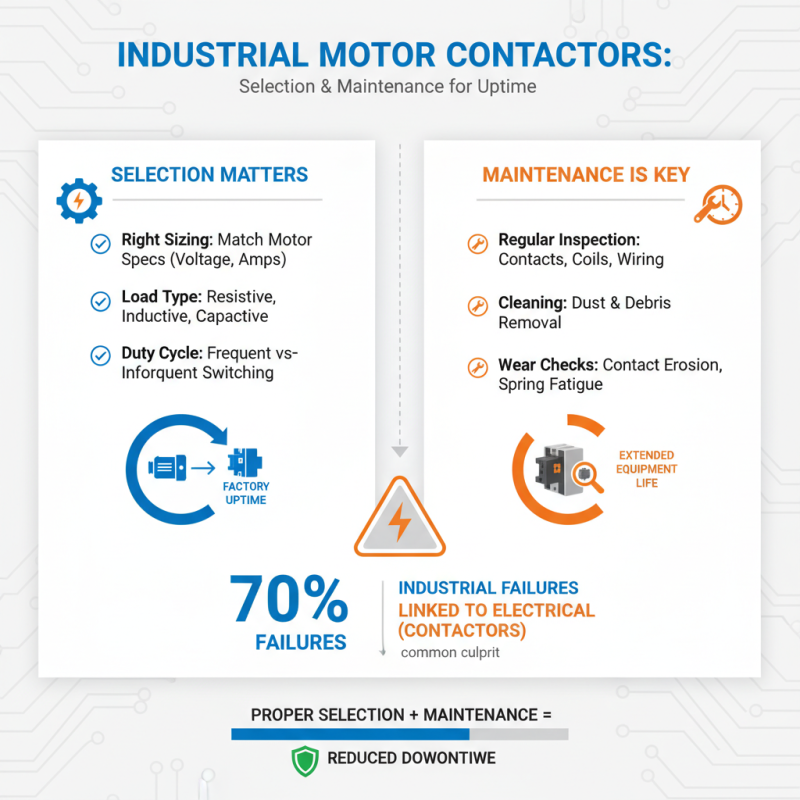
Selecting and maintaining motor contactors is crucial in industrial settings. These devices play a key role in controlling electric motors, which are vital for many operations. According to recent industry reports, approximately 70% of industrial equipment failures are linked to electrical issues, with contactor failure being a common culprit. Proper selection ensures reliability, while maintenance can extend the life of the equipment.
When choosing motor contactors, consider the load requirements. Ensure the selected contactors can handle both voltage and current loads. Oversizing can lead to unnecessary costs, while undersizing increases failure rates. Research indicates that over 50% of facilities do not regularly monitor their contactor performance. This oversight can lead to unexpected downtime and increased maintenance costs.
Regular maintenance is essential yet often neglected. Replace contactors that show signs of wear or overheating promptly. An internal study revealed that 40% of motors experience failures due to poor contactor maintenance. Simple checks, like inspecting for dust or debris, can prevent larger issues. The right practices can make a big difference in operational efficiency.

 +86 13868429846
 Contact Phone
 Contact Email